

We’re Just Horsing Around
Exquisite equine adventures for the Year of the Horse.

Chinese New Year on Tuesday heralded not only the Year of the Horse but, for the first time in 60 years, the Year of the Fire Horse.
We love good astrological theories, so we thought it would be fun to think about travel through the prism of horses on the move.
Today’s newsletter looks at:
equine experiences at different horse riding speeds: gentle trot, brisk canter, and lively gallop;
five questions with equestrian in chief Jackie Kecskes from Paws Up in Montana;
a powerful, horse-centered reading list from The Year of the Horses author Courtney Maum.
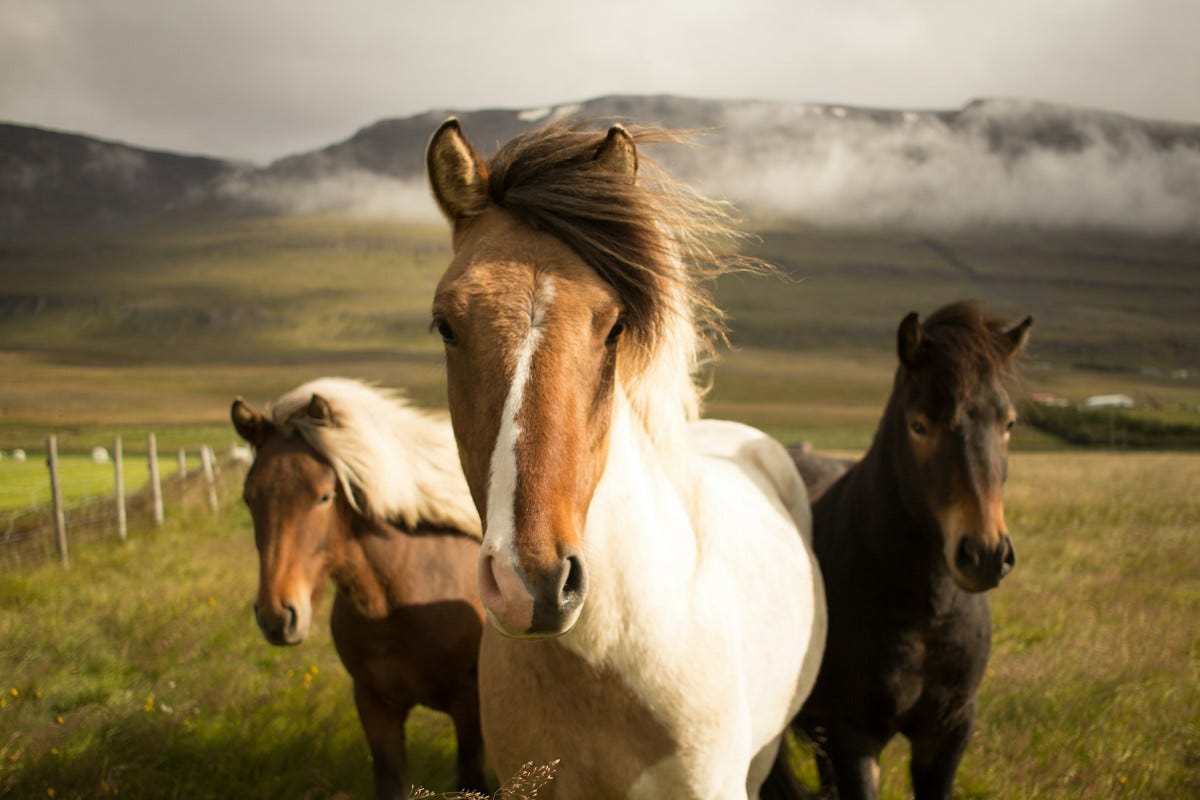
But first, let’s pause for a detour into Chinese astrology 101.
In addition to rotating through twelve animals, one per year, the Chinese lunar calendar cycles through the five Chinese elements: wood, fire, earth, metal, and water. (We like this explanation: “The five elements are set in a specific order, as one creates or controls the next. For example; wood makes fire burn, fire creates earth, earth bears metal, metal runs water, and water makes wood grow.”) Hence 12 animals X 5 years = 60 years. We just wrapped the wood cycle and have entered 12 years of fire.
2025, the year of the Wood Snake, was about introspection, shedding skin, and starting fresh. Wiping the slate clean, if you will. In Chinese astrology, the horse symbolizes strength, endurance, freedom, and confidence; fire adds urgency and intensity. In other words, we should expect this to be a year when things move, and move fast — personally and globally.
Now let’s hit the stables.

The Mane Events
TROT
Whether you’re betting the ponies or just want to buy a ridiculous hat, a day at the races can be a highlight of a trip.
Royal Ascot may be the most storied horse racing event in the world. It’s certainly the one with the most British royalty. The track is just an hour by train from central London, making it an easy day expedition. This year races begin on March 29, but the main event is June 16-20. Tickets for the Queen Anne Enclosure, the more formal, public area with a strict dress code (hats for ladies, socks that cover the ankles for gents) are now £95 ($130), while tickets for the more casual, bring-your-own picnic Windsor Enclosure are £30 ($40). Early booking rates are available until March 31.
Kentucky Derby, turning 152 years old in 2026, is the United States’ answer to Royal Ascot, if only for the fanfare, headgear, and day drinking. Derby Week kicks off Saturday, April 25, and culminates on May 2 with the Run for the Roses, the first race of the Triple Crown (Preakness Stakes and Belmont Stakes are the other two). Public events during the week include 7 a.m. Dawn at the Downs morning workouts, while 502s Day, Winsday, and Thurby (someone had fun with puns) are dedicated to local charities, businesses, and heritage. Two-day tickets with no track view begin at $175.
CANTER
You’ll want to plan a trip around these annual festivals where the horses are the stars of the show.
Seville Feria is the weeklong party held after Easter since 1874, on April 21-26 this year. The private and public casitas where everyone drinks, flamencoes, and parties are centered in the Los Remedios neighborhood, but the spirit of the fair takes over the entire town. And talk about dress code: The women turn out in ruffled flamenco dresses with flowers in their hair; the men wear short Andalusian riding jackets. It seems like anyone with a horse or a horse and carriage rides around by day, which makes for pretty hilarious traffic jams. We’re not big on bullfighting, but the Exhibition of Horse-Drawn Carriages at the Real Maestranza bullring is a fun and fascinating show where riders parade their gorgeous, historic carriages while dressed in costumes from the same time period.
Palio di Siena is an intense race held in a medieval Tuscan town every year on July 2 and August 16. Ten bareback riders, each wearing the colors of their local city district or contrada, lap three times around a tight piazza in a minute, as thousands of spectators jockey for a view from within Piazza del Campo or, if they’re lucky or well connected, from a home overlooking the piazza. Entry to the piazza is free. Tickets for grandstand and balcony seats start at €450 for both Palio di Provenzano on July 2 and Palio dell’Assunta on August 16. A less hectic (though less thrilling) way to experience the Palio is during one of the six trail races in the three days before the big races.
Calgary Stampede, held annually since 1912 and this year from July 3-12, is billed as “The Greatest Outdoor Show On Earth.” And who are we to argue with a lineup that includes bareback rodeo, barrel racing, cattle drives, and chuckwagon races, plus nightly concerts (A$AP Rocky and Alanis Morissette) and the Calgary Stampede Powwow with First Nations dancing, singing, and drumming? While there’s no formal dress code for this one, this is the week to break out your inner cowboy and cowgirl. The action happens at the Scotiabank Saddledome arena, so named because it looks like a saddle. To really get in the spirit, stop by Sam Centre, the Stampede museum nearby.

GALLOP
When you check in here, it’s all about the horses.
In the wilds of British Columbia, the eco-driven, family-friendly Siwash Lake Wilderness Resort & Ranch takes a different philosophical approach to the traditional dude ranch. Usually, emphasis is on mileage, terrain, or skill progression (i.e.: guests arrive, are matched with a horse, and head out on trail). At Siwash, it’s less about going for a ride: Everything begins with establishing a foundation at ground level for a relationship with the horses. Full days are spent grooming, walking alongside them, and observing how they relate to one another. There is a deep connection to the land, as the horses are residents who live at the ranch year-round (as opposed to being leased or contracted out seasonally, as happens at many other places). Riding unfolds from that foundation; guests are guided by fourth-generation rancher and owner Allyson Rogers through 300 acres of private homestead, nestled within another 10,000 acres of Canadian backcountry — rolling hills, open wildflower fields, waterfalls, and sparkling rivers.
You might not expect the largest equestrian center in Western Montana to also be home to a two-Michelin-key luxury resort, but those are only two impressive features at Paws Up. Here are a few more: 100 miles of trails along 37,000 acres of wilderness; James Beard-nominated chefs serving gourmet meals; and a tented Spa Town that offers treatments like breathwork, IV hydration therapy, sound baths, and pet massages. The equestrian activities include year-round options like horseback riding along the Blackfoot and into the forests, with rides lasting from an hour to the all-day Frontiersman Ride. Arena lessons for kids and adults that begin on the ground, where riders learn to communicate with their horse, and end in the saddle, where the conversation moves into action. Personalized horse whispering sessions with a ranch horse or one of Paws Up’s adopted wild mustangs “build trust between horse and human.” Cattle drives in spring, summer, and fall give guests a taste of the rodeo, while cow croquet (!!!) in the winter is just about the cutest thing we’ve ever heard.

Five Questions With Jackie Kecskes
Horses are magical — and also a little intimidating. To get a better sense of these wonderful creatures, we chatted with someone who has dedicated her life to horses, Jackie Kecskes, equestrian manager and equestrian in chief at Paws Up in Montana.
What’s the special bond between humans and horses all about?
The horse sees our most honest self. Humans wear lots of masks, with people we don’t know and even our closest friends and family. Horses operate and observe at such a high level that they are able to pick up on little things that our body manifests, whether we’re thinking about it or not. They feel micro expressions or tensions in our muscles and respond to the most honest person of ourselves that we might not even recognize we’re hiding. If you’re open to it, the horse can teach you how to become the best version of yourself.
What don’t humans usually understand about horses?
Depending on how a horse is trained, they may have the basic understanding of the world as divided into predator and prey. The horse is a prey animal (their eyes are side-facing, like cows, sheep, and goats) and humans are predators (our eyes are forward-facing, like lions and tigers), and they may still think of themselves as prey. So if they see a predator showing fear, they may get very fearful. Because they know the predator is higher than they are on the food chain, if the predator is scared, they should be even more scared.
What do you say to people who are afraid of horses?
I always tell people it’s okay to be scared, that it’s coming from a place of lack of knowledge. Most of the time we’re afraid because we don’t understand something. We do a lot of education about how horses work. If the fear is coming from a bad experience, that’s okay, too. I want to understand it and see how this time can be different.
Horses are not inherently bad. They don’t want to do wrong. They are just looking for a strong leader. They are creatures with a brain of their own that we can’t control. I think a lot of fear comes from wanting to control things. I would never say I control a horse. I would say we’ve built a relationship and that the horse willingly participates in, and the horse gives me the leadership that I’ve tried to earn. But I would never kid myself that I have control over the animal.
What’s the biggest misconception people have about horses?
That horses buck or that horses are dangerous. While there is inherent risk to riding horses, there is a way to reach them and make them feel like they never have to express worry in a dangerous way. You always hear you should never walk behind a horse, right? But I have horses that butt up against me, and I rub up against them because I know that they just want to be scratched. Horses only do dangerous things when they feel they have no other way to express themselves. A horse that feels it has a voice will always let you know how it’s feeling in a way that is conducive to you and the horse and doesn’t put you in harm’s way.
What’s a magical moment you’ve witnessed between a horse and a human?
A woman was horse whispering with us. She was with the whole herd of young horses, who are naturally curious and kept coming in closer. We were working on setting boundaries and she realized, “the horses are doing it to me the same thing I allow people to do because I’m not clear with my boundaries.” Through the whispering, she realized that setting boundaries wouldn’t scare the horses, but that the horses respected her for it. And it could be the same with humans.
Straight from the Horse’s Mouth
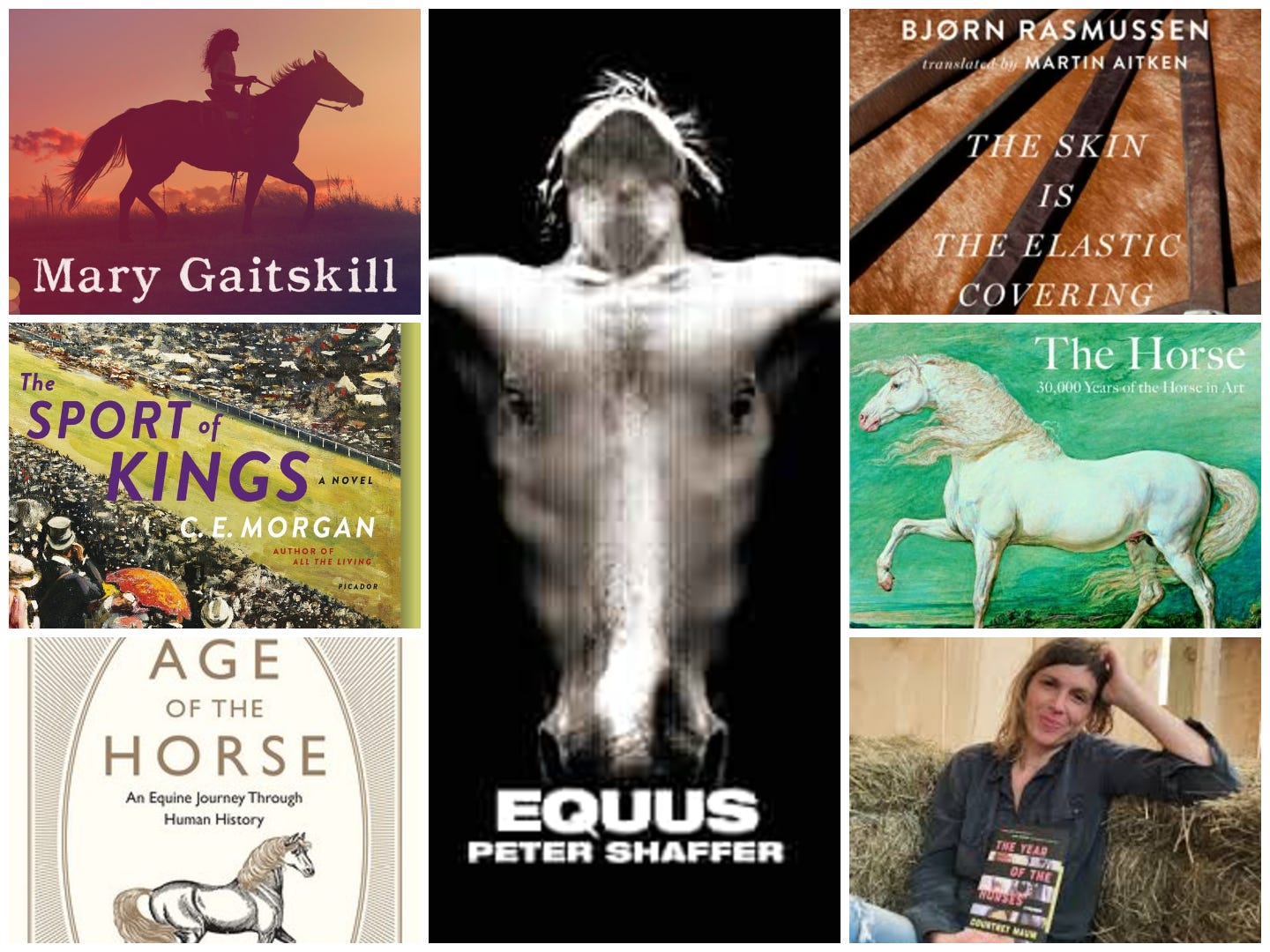
Courtney Maum, writing coach, novelist, memorist, humorist, and author of The Year of the Horses, recommends the following equine-related reading:
Equus, Peter Shaffer
“This play is an absolute favorite.” It pushes into the deep, dark recesses of human existence.The Age of the Horse: An Equine Journey Through Human History, Susanna Forrest
“A whole overview of humans and horses over time” via anthropological research, analysis, and anecdotes.The Horse: 30,000 Years of Horses in Art
Big and beautifully illustrated. “I love this one. It is rad. It has a huge variety of equestrian themed art throughout the ages.”The Skin Is The Elastic Covering That Encases The Entire Body, Bjorn Rasmussen
“An amazing and wacky micro press book. Very BDSM,” explores the erotic inner workings of a teenage boy in love with a much older riding instructor.The Mare, Mary Gaitskill
A young girl develops a passion for horse riding through a relationship with an abused horse. “One of my favorite books of all time. It’s a pretty dark novel.”The Sport of Kings, C.E. Morgan
“It won the Pulitzer Prize. It’s pretty hard to read but it’s an incredible book about the role that Black enslaved Americans played in the race horse industry in Kentucky.”
And we recommend Courtney’s book, The Year of the Horses, an investigation of the intertwined relationship between women and horses in parallel with the author’s very personal account of how she rode through her midlife depression on the back of a horse.
Love this issue! You know I love a theme, and now I want a Horsey trip.
I recently shared a conversation with a sanctuary that serves blind and senior horses and it brought me to tears. If you love stories of second chances, you’d appreciate it. <3